
Daihatsu Hijet Deckvan vs. Polaris Ranger Crew XP 1000 NorthStar
Which crew UTV is going to give you the best bang for your buck in 2026? Here we line up the Polaris Ranger Crew XP 1000 Northstar against the upstart Daihatsu Hijet Deckvan. Scroll down to read our analysis.
Jump To Section
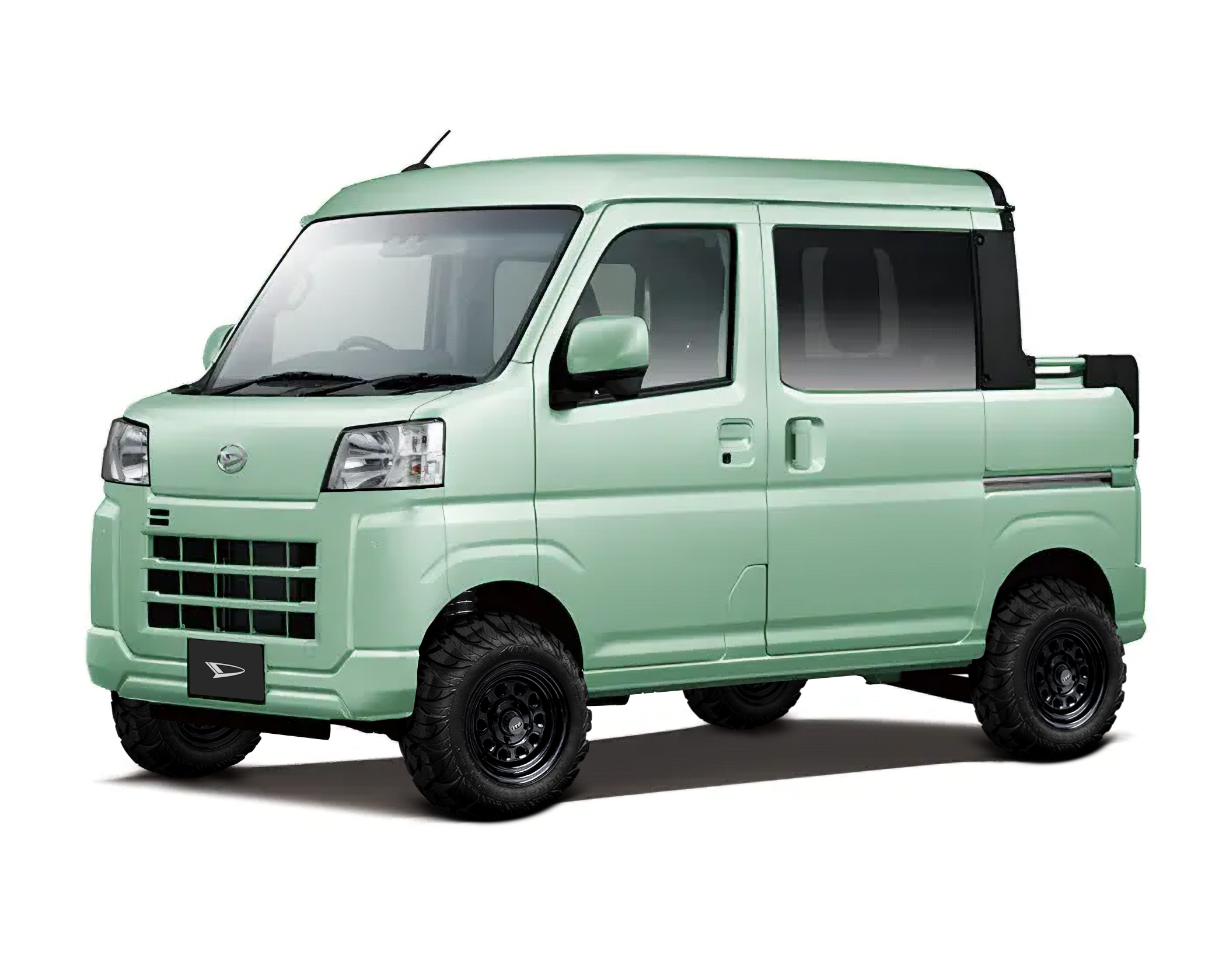
Most work UTV users end up hitting the same problem at some point: You need to shift people and gear, often in the most trying weather across the toughest terrain. And the Polaris Ranger Crew XP 1000 NorthStar has traditionally been a typical go-to answer that the UTV world has to that very problem. Fully enclosed, HVAC-equipped, and genuinely capable of getting you where you need to go. But it’s not the only answer, and many former traditional UTV fans are instead turning to the Daihatsu Hijet Deckvan for what is often a better fit for their needs, at a better price.
Starting with a quick overview: Both machines are fully enclosed. Both come with heat and AC as standard. Both carry passengers and cargo. Both are 4×4 off-road capable. But they’re very different propositions when you get into the details — what they can actually do, how comfortable they are over a full working day, and what they will really end up costing once you count in everything. So let’s get into those details so that you also can decide which of these machines is going to be the best off-road solution for the jobs you need doing.
The Deckvan's Big Idea: One machine, Three Roles
The Polaris Ranger Crew NorthStar does one thing well: it’s a powerful, enclosed work UTV that carries three people in all-weather comfort with a bit of space in the bed out the back. It’s a clear proposition, and the Polaris delivers on it. The Deckvan, on the other hand, is built around a different idea. It can be three different vehicles depending on what the day calls for:
- Full crew carrier: All four seats up, four people aboard, heat and AC running, fully enclosed. A proper crew vehicle to take your people far off the beaten track in.
- Enclosed gear locker: Fold the rear seats flat and the entire rear part of the cab becomes climate-controlled, weatherproof storage; your gear stays dry and secure whatever the weather. Two people up front. Gear out of the elements in the back. Plus the deep bed at the back for more hauling. Nothing else in the UTV market has this combination of features.
- Open cargo hauler: Use the rear bed for conventional cargo — tools, feed, materials — just like any other mini truck. It may not be as long as the Hijet Regular Cab’s 6ft 8in bed, but its depth makes up for this and means giving it a surprisingly high volume.
So, sure, the Ranger Crew is a practical off-road people hauler. But it was never designed to switch between crew vehicle, enclosed hauler, and open hauler in seconds without any modification. The Deckvan was. That’s not some kind of bolted-on afterthought. It’s the whole concept.
Seating and comfort: more than just one extra seat
The Deckvan seats four. The Ranger Crew NorthStar seats three. There’s the obvious headline right there. But it’s the way those seats are arranged that matters just as much as the count.
First up, the Ranger’s setup: This is a bench across the full cab width — one driver plus two side by side. It’s well-made, with adjustable seatbacks, and it does have decent back support. But the pity the poor middle passenger with no door, no window, and rather limited personal space. Maybe fine for a short run. Rather less comfortable after a full day of getting in and out. (And even more uncomfortable if you’re being bounced against your seatmates on a particularly rough trail.)
On the other hand, there’s the Deckvan. Here every occupant gets their own proper, individual seat. Up front, both seats recline independently and adjust fore and aft as well. Yes, these are real seats — not UTV seats stretching to be something better. In the rear, two more seats on the bench have proper legroom and lots of personal space. Four people. Four seats. Four doors. Everyone gets a window. No one gets crowded against their seatmates.
At the end of a long day traveling over rough terrain, the passengers in the Deckvan’s seats — properly supported, seats set exactly where they need it — are going to be less tired than the people who spent the same hours on the Polaris’ bench. That’s not a knock on Polaris. It’s the just the nature of bench seating.
Sliding doors: the killer feature you never realized you needed
The Ranger Crew NorthStar isn’t a push-over. Unlike some UTVs, it actually has proper doors and not some sort of option after-thought. They’re rear-hinged doors, and they’re solid and fit well. The Deckvan, on the other hand, takes things to another level with its wide, tall sliding rear doors. If you haven’t lived with sliding doors, you probably have no idea just what a big deal these are.
First of all, sliding doors need almost no clearance. Parked against a fence, next to a trailer, inside a barn — the door slides open regardless. A hinged door in the same situation means either moving the vehicle, fighting the door, or squeezing out awkwardly. With the Deckvan you just slide and step.
And that same wide, squared-off opening makes loading dramatically easier. Stacking equipment, dropping in feed bags, sliding in a cooler, or welcoming your dogs onboard to go out into the fields, whatever you want to do, tjat opening is large, the height is just right, and loading up is a cinch. It’s not just stuff and animals either. Your crew (or your grandkids) will find getting in and out much easier thanks to this superior door solution.
Edge: Hijet Deckvan —for the higher passenger count, better seat quality, and ease of access.

All-weather comfort: an honest draw (but there's a catch)
So this is where the competition heats up. The Ranger Crew NorthStar Premium isn’t one of these basic UTVs you need to kit out with options just to make weatherproof. It comes fully enclosed with factory HVAC as standard. Powered front windows. Full glass rear panel. Windshield wiper and washer. Sound insulation. Heat and AC. It’s genuinely well-equipped. Credit where credit’s due.
But that’s just on the surface. You see, the Ranger’s Pro-Shield cab is a factory-installed enclosure that’s built onto a UTV platform. The thing is, though, that the Deckvan’s enclosed cab isn’t added to the vehicle. It is the vehicle. The Deckvan was designed from the ground up as an enclosed cab machine with a single safety shell — every seal, every panel, every dimension conceived as one unified whole. And it’s been this way right since the introduction of the very first Deckvan model back in 1989. So, both keep the weather out. But one was always meant to, and the other has been made to.
Edge: Tie on climate control. Hijet Deckvan on cab integrity and long-term weather-proof sealing.
Cargo: this is where the gap gets wide (and deep)
The Ranger Crew’s bed is 36.7 inches long, 54.2 inches wide, and 12.5 inches deep. Decent, solid numbers for a work UTV.
But, then there’s the Deckvan’s bed that’s 34 inches long, 54 inches wide, and 24 inches deep. That depth figure is the one that changes everything — nearly double the Polaris. Run the actual numbers and here’s what you get:
- Polaris Ranger Crew bed: 14.4 cubic feet
- Daihatsu Hijet Deckvan bed: 25.5 cubic feet
That’s 80% more load volume, despite being in a bed that’s actually slightly shorter. All of it comes from that extra 12 inches of depth.
In practice, a 24-inch deep bed means feed bags, toolboxes, fence posts, and coolers go in and stay in. You’re not stacking carefully, hoping the terrain cooperates, and praying nothing falls out. The Polaris’s 12.5 inches handles shorter loads well, but anything bulky needs to be lashed down, or left behind.
The thing is the open bed is only part of the story. Fold the Deckvan’s rear seats and the entire rear cab becomes fully enclosed, weatherproof storage — dry, secure, and out of the weather. Then flip the seats back up again when you need passengers. It just takes seconds. The Polaris can’t do this. No UTV we know of does this.
So, think about a day out hunting. Gear in the enclosed rear section — jackets, optics, ammunition, all dry and out of sight. Open bed handles everything else. The Ranger Crew can’t do that.
Edge: Hijet Deckvan — significantly, on both raw volume and versatility.
Price: $4,000 less gets you one more seat
The Polaris Ranger Crew XP 1000 NorthStar Premium starts at $33,199–$33,599 MSRP. Add the standard $1,395 destination charge and you’re at around $34,600 before tax and dealer prep. That’s the real starting point … and that’s a big chunk of change.
Then there’s the Hijet Deckvan at just $30,500. All-in. No destination charge. No prep fee on top. (Plust dealers will typically sell below MSRP, so the real number is often lower.) Four individual seats, fully enclosed weatherproof cab, heat and AC standard, sliding rear doors, power steering, power windows, remote unlocking, full lighting — all included.
For that extra $4,000-plus the Polaris costs, you do get more horsepower, a factory winch, greater towing capacity, and more aggressive off-road capability. But then there’s what you give up: a whole seat, sliding door access, the folding rear enclosed storage mode, and considerably lower fuel bills week after week.
On audio: neither machine includes a factory system at this spec level. The Deckvan has a standard 2DIN slot — add any head unit you like. The Polaris requires stepping up to the NorthStar Ultimate for factory audio, which takes the MSRP to around $36,499. Then that’s nearly $8,000 more than the Deckvan all-in, before destination charges. Oof!
Edge: Hijet Deckvan — better value and has the edge on spec as well.
Fuel economy: the cost that kills you slowly
The Ranger Crew runs an 82 HP ProStar DOHC parallel twin. That’s quite the engine. But a large-displacement gas UTV like this in regular work use typically returns 15–20 MPG. That’s it.
The Deckvan does over 35 MPG in tough work conditions. Conservatively. And 40+ MPG is very achievable even with a slightly lighter right foot.
At 2,000 miles a year — modest for a working off-road vehicle like these — the Deckvan burns roughly half the fuel of the Ranger Crew. With the way gas prices are shooting through the roof, over five years that adds up to real money. And that extra fuel cost is layered on top of the $4,000-plus purchase price premium you pay for the Deckvan. Multiply this across a fleet, and the cost gap widens exponentially.
Edge: Hijet Deckvan — by a significant margin.
Build quality
The Ranger Crew NorthStar is a well-built machine. There’s no doubt that Polaris has refined this platform over many years and the NorthStar cab system is genuinely good for a factory UTV enclosure.
But the Deckvan is at another level. Its fully enclosed steel shell construction and the fact that it’s built to some of the most exacting manufacturing standards in the world by a direct subsidiary of Toyota gives it a sense of solidity and craftsmanship that the Polaris cannot match. Strip each down and compare the Ranger’s welded steel tube construction with the advanced underpinnings of the Deckvan, and you can see the quality gulf between them.
Edge: Hijet Deckvan on long-term durability and design finesse.
Where the Ranger Crew NorthStar pulls ahead
There’s no doubting the Ranger Crew does have some genuine strengths:
- Power. 82 HP against the Deckvan’s 53 HP is a genuine gap. If your property means really steep grades or very deep mud, that power difference could really matter.
- Towing. 2,500 lbs vs the Deckvan’s 1,200 lbs. If you’re pulling fully loaded trailers regularly, that 1,000 lb difference could be significant.
- Factory winch. A 4,500 lb winch with synthetic rope comes standard on the NorthStar Premium. The Deckvan doesn’t include one.
- Ground clearance and suspension. 14 inches of clearance and long-travel suspension give the Ranger Crew a real advantage over extreme rocky terrain.
- Speed. Quite a bit faster. If you’re covering large properties and travel time matters, that counts.
But which one is right for you?
The honest answer depends on what your off-road work situation actually looks like.
The Deckvan is likely the right fit if you:
- Need to carry four people regularly — in proper individual seats with four doors, not three squeezed together on a bench.
- Want one machine that switches between crew carrier, enclosed gear storage, and open hauler depending on the day and the mission.
- Work in all seasons and want individual reclining seats, standard AC & heat, and a genuinely fully weatherproof steel shell.
- Value sliding doors for the faster loading and better ease of access for passengers.
- Need to keep fuel costs down.
- Want one all-in price with no destination charge or extras padding the bill at the end.
- Value the more sophisticated design and build-quality you are getting from a Toyota subsidiary.
On the other hand, the Ranger Crew NorthStar is likely the right fit if you:
- Deal with extremely demanding terrain day in day out — steep grades, deep mud, boulders etc.
- Tow heavy loads on a regular basis and really do need that full 2,500 lb capacity.
- Want a factory winch included from day one.
- Cover large areas of off-road terrain where travel speed is a real consideration
But, if you need a fully equipped, all-weather off-road crew cab vehicle that carries four people, switches modes in seconds, and costs at least $4,000 less to buy and half as much to run, then the Hijet Deckvan is worth a serious look. And the best way to really get to know it is to see one in person. Contact Mini Truck Depot to find your nearest dealer, or see different color options and spec details here, or you can click on one of the different color options below.
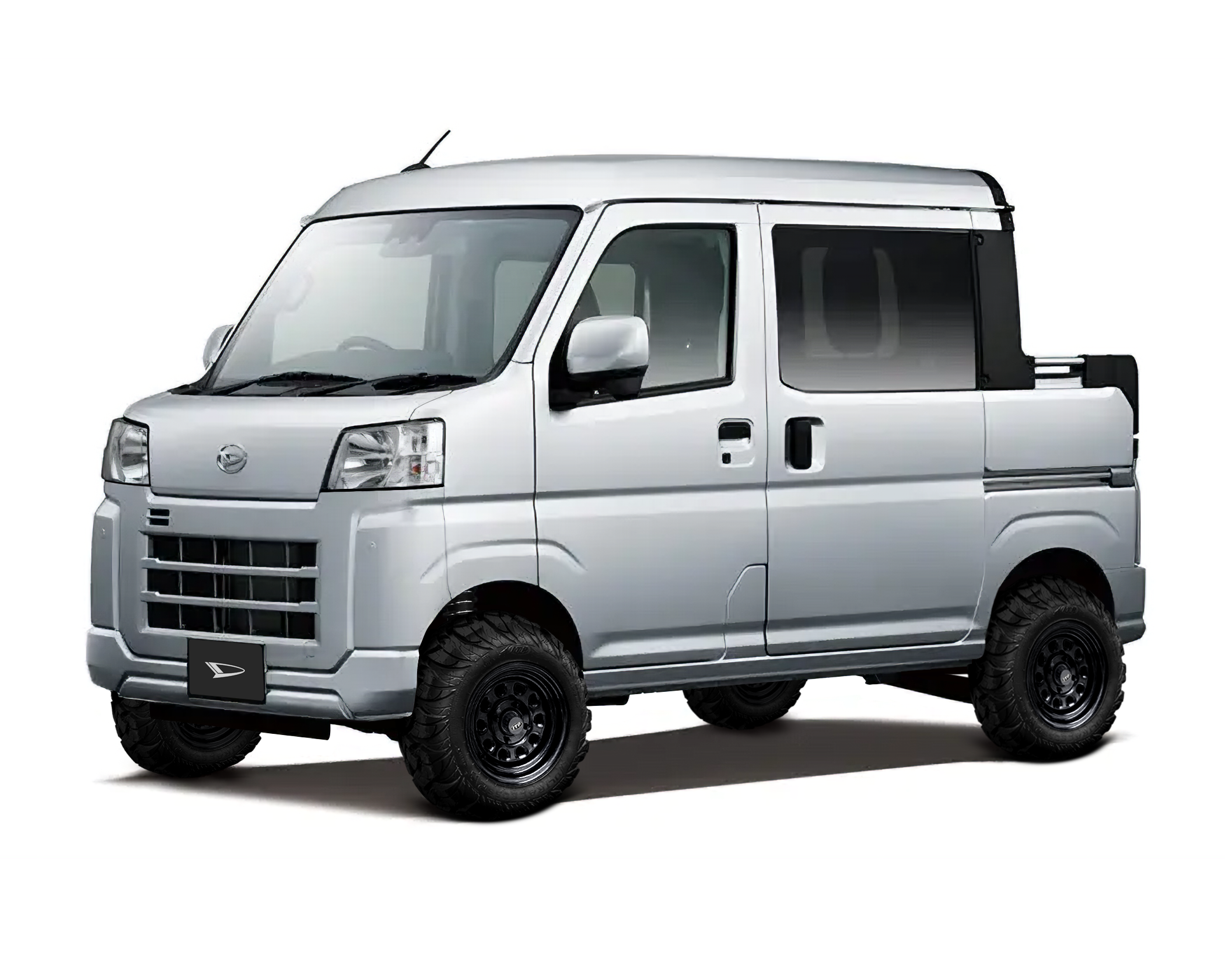
$29,000.00
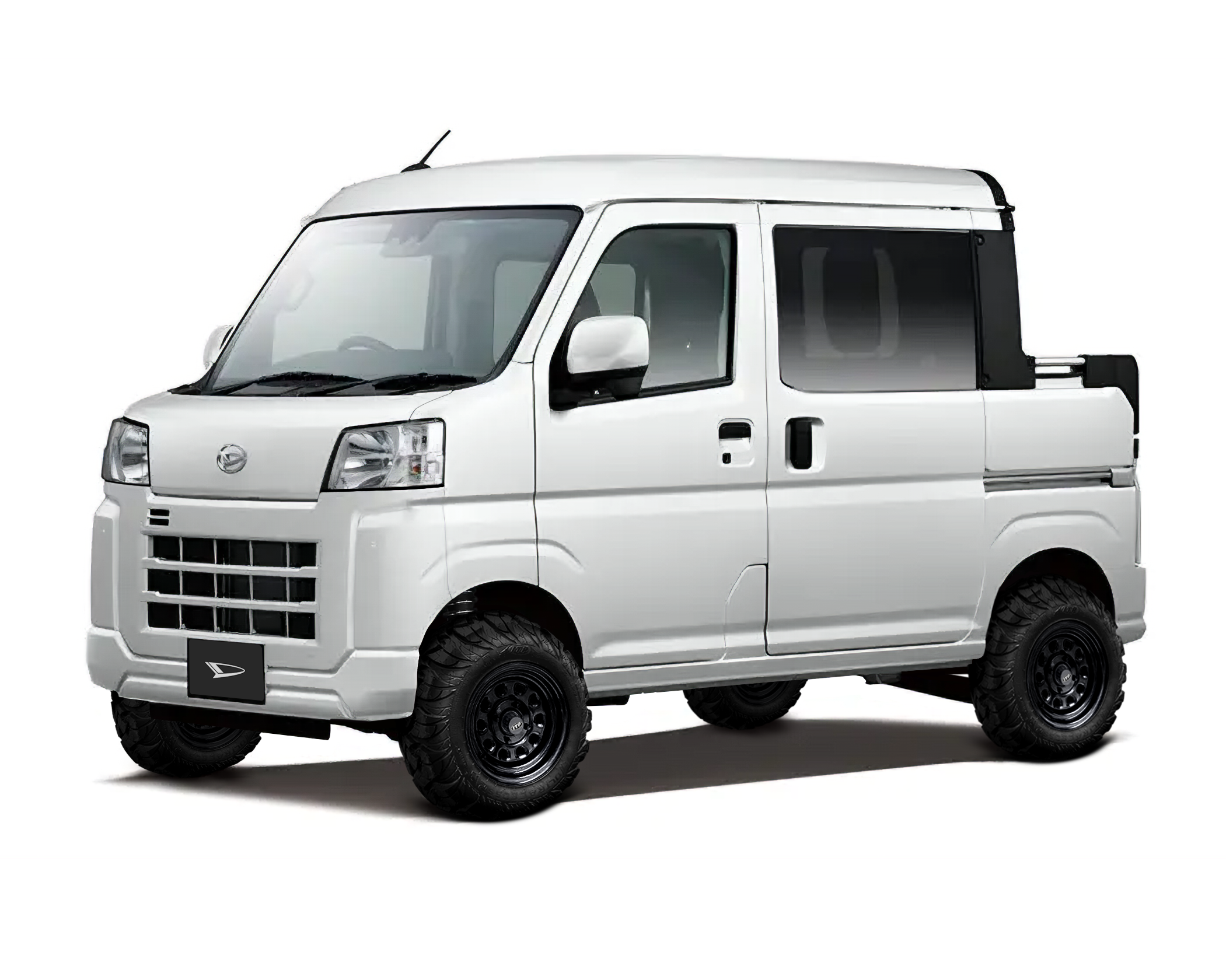
$29,000.00
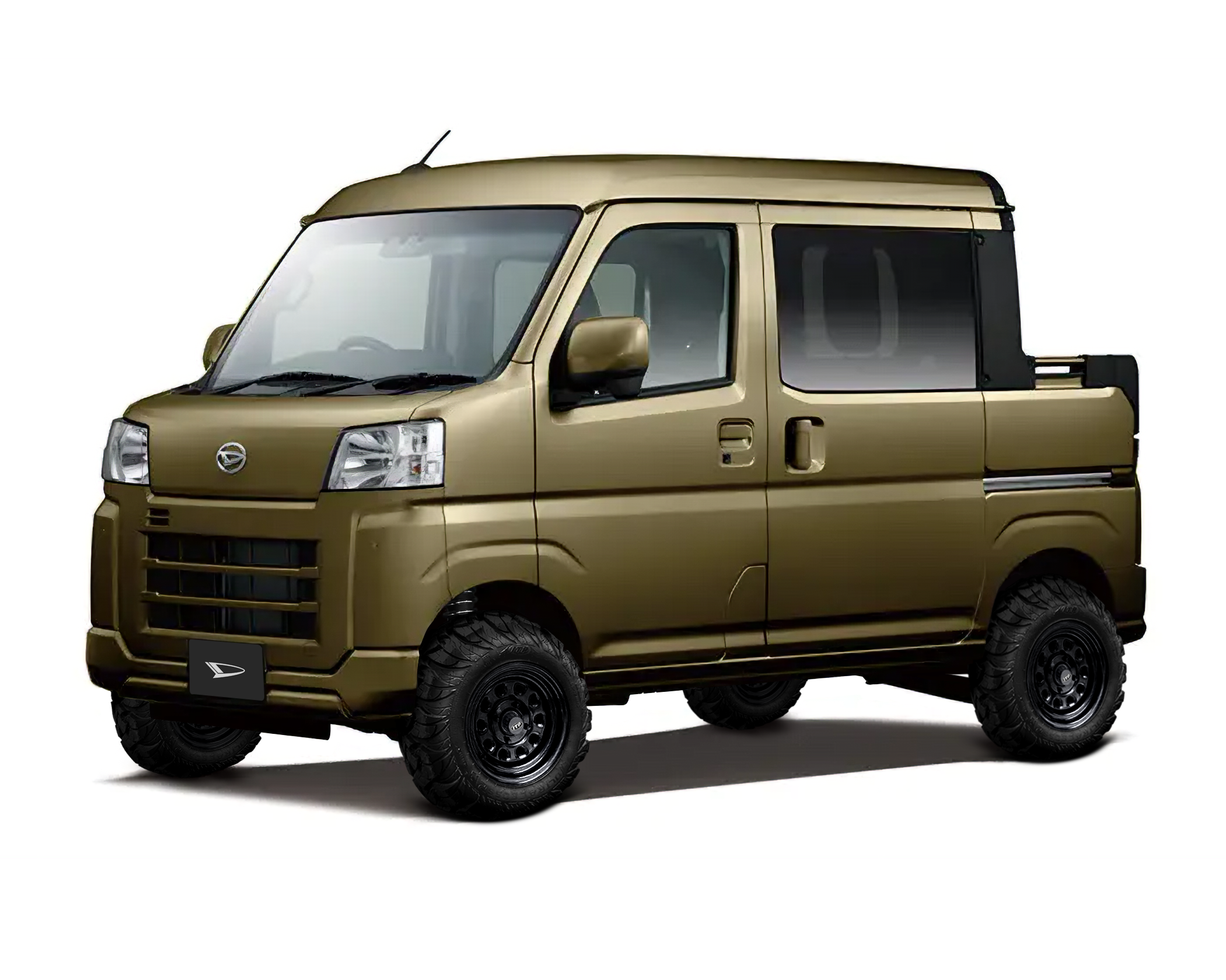
$30,500.00
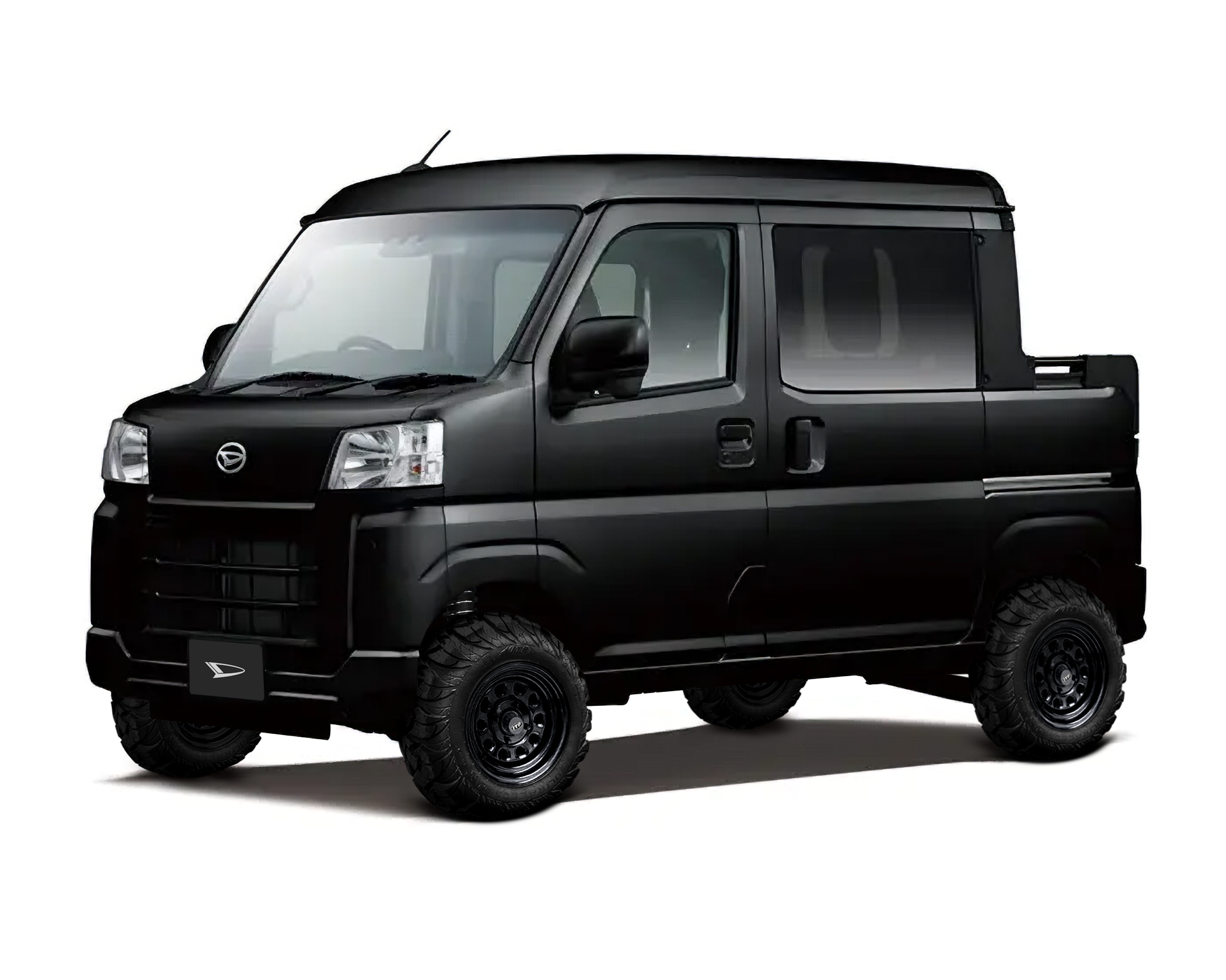
$30,500.00
$30,500.00
Head-to-Head Summary
| Daihatsu Hijet Deckvan | Polaris Ranger Crew XP 1000 NorthStar Premium | |
|---|---|---|
| Starting MSRP | $30,500 | ~$33,199–$33,599 |
| All-in price (incl. destination) | $30,500 | ~$34,600+ |
| Seating capacity | 4 (front individual seats + rear bench) | 3 (bench) |
| Front seats | Individual, reclining, adjustable | Bench with adjustable seatback |
| Rear doors | Wide sliding doors | Rear-hinged doors |
| Enclosed cab (standard) | ✓ Yes — original design | ✓ Yes — Pro-Shield cab system |
| Heating & AC (standard) | ✓ Yes | ✓ Yes |
| Audio system (standard) | ✗ No (2DIN slot so you can add your own) | ✗ No (Ultimate trim only) |
| Cargo bed | Open rear bed + enclosed rear cab storage (seats folded) | Open rear bed only |
| Cargo bed volume | 25.5 cu ft | 14.4 cu ft |
| Cargo bed dimensions | 34″ L × 54″ W × 24″ D | 36.7″ L × 54.2″ W × 12.5″ D |
| Cargo bed payload | 800 lbs | 1,000 lb |
| Fuel economy | 35+ MPG | ~15–20 MPG |
| Towing capacity | 1,200 lbs | 2,500 lbs |
| Factory winch | ✗ No | ✓ Yes (4,500 lbs) |
| Ground clearance | ~10 inches (lifted) | 14 inches |
| Top speed | 25 MPH (federal limit) | ~60+ MPH |
| Best for | 4-person crew work, multi-mode versatility, all-weather comfort, fuel efficiency | Demanding terrain, heavy towing, high-speed property coverage |
All prices shown are MSRPs. Dealer pricing may vary. Polaris destination charge ~$1,395 additional. Pricing is correct as of mid-2026. The Daihatsu Hijet Deckvan is sold for off-road use only per Federal law.
